Project Overview
Mobile Water Treatment Plant for DPHE

Mobile Water Treatment · Reverse Osmosis · RO Water Treatment · Emergency Water Supply · DPHE · Water Infrastructure · Portable Water Treatment
Project Overview
Project Description
The Mobile Water Treatment Plant for the Department of Public Health Engineering (DPHE) was developed to provide a reliable, efficient and flexible solution for treating water in diverse locations across Bangladesh.
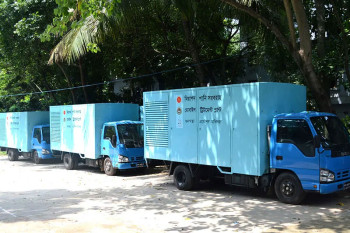
The project involved the supply of a pickup-mounted Reverse Osmosis (RO) Water Treatment Plant with a treatment capacity of 2,000 liters per hour. Designed for mobility and rapid deployment, the system can be transported to locations where permanent water treatment infrastructure is unavailable, insufficient or temporarily disrupted.
The project was executed for the Department of Public Health Engineering (DPHE) and was completed between February 2014 and June 2014.
Unlike conventional fixed treatment facilities, the Mobile Water Treatment Plant is mounted on a pickup vehicle, allowing the complete treatment system to be transported and deployed where clean water is urgently required.
This mobile configuration makes the plant suitable for use in remote locations, temporary settlements, emergency response operations, natural disasters and areas with limited water supply infrastructure.
The system provides a practical solution for situations where constructing a permanent water treatment plant may not be immediately possible or where a rapid and temporary water treatment solution is required.
The plant utilizes Reverse Osmosis (RO) technology as its primary water treatment process. RO is an advanced membrane-based treatment technology used to reduce dissolved contaminants and impurities from source water.
With a production capacity of 2,000 liters per hour, the system is designed to produce a substantial quantity of treated water while maintaining the mobility and flexibility required for field deployment.
The 2,000 liters per hour capacity allows the Mobile Water Treatment Plant to support a variety of water supply requirements.
The system can be deployed to assist communities facing temporary water shortages, support emergency and disaster response operations, provide water treatment in remote areas, and serve temporary facilities or large gatherings requiring an independent water treatment solution.
Its mobility enables the treatment facility to be relocated according to changing operational requirements, making it a valuable addition to emergency water supply infrastructure.
The Mobile Water Treatment Plant was designed with operational reliability and ease of use in mind. The system incorporates user-friendly controls and monitoring arrangements to support effective operation by trained personnel.
The treatment unit is constructed using durable materials suitable for transportation and operation in varying environmental conditions. Its integrated design combines water treatment technology, mobility and practical engineering to provide a dependable solution for field applications.
Access to clean and safe water is particularly critical during emergencies, natural disasters and situations where conventional water infrastructure is unavailable or disrupted.
The successful completion of the Mobile Water Treatment Plant project contributed to the Department of Public Health Engineering's objective of strengthening its capacity to respond to urgent and diverse water supply requirements.
The project demonstrates how the combination of advanced water treatment technology and mobile infrastructure can provide practical solutions to critical water supply challenges.
Zi Group is proud to be associated with innovative water treatment and infrastructure solutions that contribute to public health, environmental sustainability and community resilience. Through expertise in Reverse Osmosis, water treatment, mobile infrastructure and integrated engineering solutions, Zi Group remains committed to delivering reliable and sustainable solutions for diverse water supply challenges across Bangladesh.